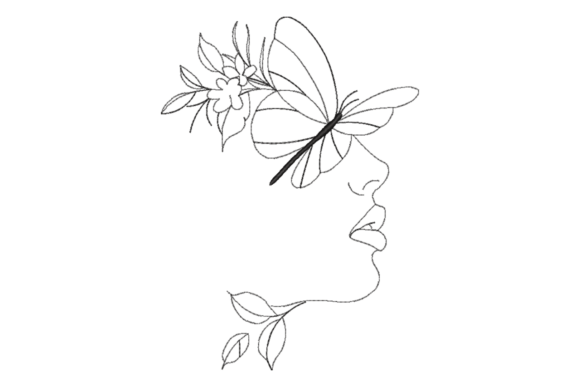
Butterfly Face Line Art: A Merch Review
As an embroidery designer who specializes in commercial branding and small business merchandise, I approach every new machine embroidery design with a critical eye. It is not enough for a graphic to look beautiful on a screen; it must translate effectively into thread, withstand washing, and serve a functional marketing purpose. When reviewing the Butterfly Face Line Art, my immediate assessment focuses on its viability for professional applications ranging from staff uniforms to boutique packaging. This design, described as having a sophisticated minimalist aesthetic with continuous-line elements, presents unique opportunities and specific technical considerations for business owners and apparel decorators.
Visual Personality and Brand Alignment
The first impression of Butterfly Face Line Art is one of abstract elegance rather than literal illustration. In the context of the "Bugs" category, this design avoids the juvenile or overly cartoonish aesthetic that often plagues insect-themed embroidery. Instead, the botanical line art approach suggests a premium, organic, and artistic sensibility. For a small business, this visual personality is incredibly versatile.
If you are operating a florist shop, an organic bakery, a wellness studio, or a handmade skincare brand, this design communicates natural beauty without being aggressive. The minimalist nature implies modernity and cleanliness, which helps establish trust with customers. Unlike dense, complex fills that can look heavy on lightweight garments, the line art style feels airy and high-end. However, because it relies on abstraction, it serves best as a secondary logo, a decorative accent, or a lifestyle brand mark rather than a primary corporate identifier for industrial or tech-focused businesses. It softens brand identity while maintaining professionalism.
Commercial Applications for Small Business Merch
When integrating Butterfly Face Line Art into small business merch, versatility is key. Based on the continuous-line description, this design is particularly well-suited for specific commercial applications where detail and drape matter.
- Tote Bag Design: Canvas totes are a staple for markets and retail. The open nature of line art prevents the fabric from puckering, keeping the bag flat and usable. The design adds perceived value to what might otherwise be a generic promotional item.
- Apron Embroidery: For cafés and florists, aprons take a beating. A minimalist line design reduces stitch count compared to solid fills, making the apron lighter and more comfortable for staff during long shifts while still providing clear branding.
- Custom Apparel Accents: Rather than center-chest placement, consider using this design as a sleeve cuff detail, a yoke accent on the back of a shirt, or a pocket-edge embellishment. These placements utilize the elegant flow of the butterfly face to guide the eye across the garment.
- Product Packaging: Embroidered tags or drawstring pouches featuring this design elevate the unboxing experience for Etsy sellers and handmade product creators. The botanical theme reinforces the artisanal quality of the goods inside.
Technical Considerations for Patches and Caps
While Butterfly Face Line Art excels on flat garments, applying it to structured items like caps or creating an embroidered patch requires careful planning. Continuous line designs can be deceptive; they look simple but demand precision.
Cap Embroidery Challenges
Curved surfaces distort straight lines. If the butterfly face relies on perfect symmetry or long, uninterrupted running stitches, the curve of a cap front may cause registration issues. Before committing to cap embroidery, test the design on a curved surface. You may need to slightly adjust the digitizing to account for the push-and-pull distortion inherent in hat hooping. Ensure the design fits within the safe embroidery area of your specific cap frame to avoid needle strikes or distorted proportions.
Patch Production Viability
For patches, line art must be bold enough to remain legible at smaller sizes. Thin, single-run stitches can disappear against the twill background or fray over time. Verify that the stitch density is sufficient for edge definition. If the lines are too delicate, consider adding a subtle satin border or increasing the stitch width slightly for patch production. Always confirm the hoop size requirements before purchasing the digital embroidery file to ensure it matches your patch-making capabilities.
Fabric Texture and Stabilizer Strategy
The success of any line art design depends heavily on the interaction between thread and fabric texture. Because Butterfly Face Line Art likely utilizes running stitches or bean stitches to create its continuous effect, high-texture fabrics like linen, burlap, or heavy canvas can cause the thread to sink in, breaking the visual continuity.
For textured materials, use a water-soluble topping to keep the stitches sitting on top of the fabric weave. Conversely, on stretchy knits used for custom apparel, adequate backing stabilizer is non-negotiable. Line art has little internal structure to support itself, so if the fabric stretches during hooping and relaxes afterward, the design will warp. Use a cut-away stabilizer for knit performance wear to maintain the integrity of the botanical lines through repeated washing and wearing. Always test on a scrap of the actual production fabric before running a full batch.
Ensuring Professional Results and Licensing
Before loading this embroidery file for a client project or your own inventory, adhere to these professional protocols to ensure the finished product meets commercial standards.
- Verify Commercial Rights: Never assume a design is cleared for business use. Check the license terms specifically for commercial embroidery rights. Some designers restrict files to personal use only, which could expose your business to legal risk if used on merchandise for sale.
- Create a Printable Mockup: Before stitching, generate a printable mockup or digital visualization to show clients how the abstract butterfly face interacts with their specific logo and color palette. This manages expectations regarding the minimalist aesthetic.
- Test Thread Colors: Line art relies entirely on contrast. Test the design in black and white first to evaluate value separation. Then, select thread colors that complement the brand without blending into the fabric. Tone-on-tone embroidery looks luxurious but requires perfect tension; high-contrast is safer for readability.
- Audit Design Assets: Compare this design beside your existing design assets. Does the line weight match your current branding? Visual consistency builds recognition. If your other logos are bold and thick, a wispy line art butterfly may feel out of place unless intentionally used as a textural contrast.
- Check Size Limits: Determine the minimum viable size. Reduce the design incrementally during testing to find the threshold where details merge or stitches overlap excessively. Document this minimum size for future reference on tags and labels.
Elevating Handmade and Boutique Value
Ultimately, Butterfly Face Line Art is a strategic asset for businesses that sell feeling as much as function. In the saturated market of handmade product sales and local services, differentiation is difficult. This design offers a way to signal sophistication and attention to detail. It transforms a standard uniform into a curated outfit and turns a simple tote into a fashion accessory.
By treating this machine embroidery design with the same rigor as any other business investment—testing, verifying, and strategically placing it—you ensure that the abstract elegance translates into tangible brand equity. Whether used as a subtle signature on a collar or a bold statement on a market bag, the key lies in respecting the technical limitations of the medium while leveraging the artistic strengths of the motif. Always prioritize the quality of the stitch-out over the speed of production, as the crispness of those continuous lines will directly reflect the quality of your business in the eyes of your customer.