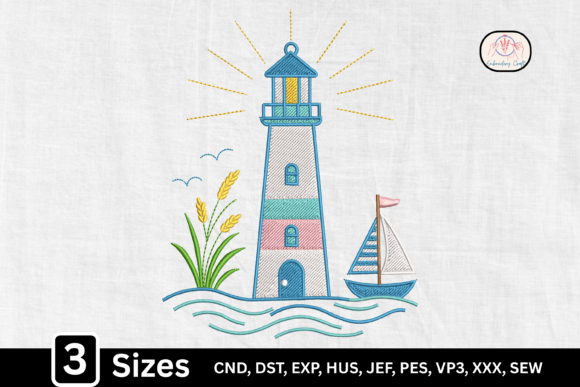
Nautical Coastal Lighthouse: A Stitcher’s Review
When I first loaded the Nautical Coastal Lighthouse machine embroidery design into my software, I wasn't just looking for a pretty picture; I was evaluating it as a potential workhorse for my upcoming summer collection. As someone who runs a small embroidery business and creates digital assets for other makers, I know that a design needs to be more than just visually appealing on screen. It has to translate beautifully from a digital embroidery file to physical fabric without causing registration issues, thread breaks, or customer returns. This coastal-inspired motif immediately struck me as having that perfect balance of nostalgic charm and structural integrity that serious crafters and Etsy sellers look for when planning seasonal inventory.
First Impressions and Design Personality
The visual mood of this lighthouse embroidery design is undeniably peaceful yet structured. Unlike some novelty beach designs that feel cartoonish or overly complex, this artwork leans into a classic nautical aesthetic. The lines are clean, suggesting a digitizer who understands how thread lays down on fabric rather than just tracing an image. For a handmade product creator, this matters immensely. A design with too many unnecessary jumps or chaotic fill stitch areas can turn a simple tote bag project into a frustrating ordeal. Here, the layout feels intentional. The verticality of the lighthouse provides a natural anchor point, making it an excellent candidate for center-chest placement on sweatshirts or centered panels on tea towels.
I particularly appreciate the implied texture in the digitizing. You can tell where satin stitch columns would define the railing and windows versus where fill stitch creates the masonry texture of the tower itself. This variation in stitch type is crucial for preventing the "bulletproof" effect where dense embroidery makes fabric stiff and unwearable. When evaluating this for commercial embroidery use, that structural awareness tells me the finished product will have a professional drape and hand-feel, which directly influences perceived value and customer trust.
Real-World Application: The Canvas Tote Test
To truly judge this design, I mentally walked through a recent client request for custom beach tote bags. My client wanted something that felt like boutique merchandise rather than generic tourist gear. The Nautical Coastal Lighthouse fits this brief perfectly because of its scalability and theme clarity. On a canvas tote bag design, the vertical aspect ratio utilizes the hoop space efficiently without requiring excessive repositioning. I envisioned stitching this out in a muted navy and cream palette to match high-end linen blends.
In this scenario, the design serves as a focal point that elevates the entire item. For an Etsy seller or small shop owner, this specific embroidery project offers high giftability. It reads well in printable mockups for pre-orders because the distinct silhouette remains recognizable even at thumbnail size. However, success here depends on execution. I would pair this with a medium-weight cutaway stabilizer to support the canvas and prevent the lighthouse from distorting the bag's shape. The result is a personalized gift that feels substantial and heirloom-quality, justifying a higher price point than standard vinyl transfers or screen prints.
Technical Considerations for Makers
While the aesthetic is strong, practical application requires attention to technical details. If you are using this for baby embroidery or lightweight apparel, you must verify the stitch density before hitting start. Lighthouses often involve architectural elements that can become dense if not digitized with garment wear in mind. Always run a test stitch-out on scrap fabric that matches your final project’s weight and weave. This step is non-negotiable for maintaining brand consistency and avoiding wasted materials.
- Fabric Texture Compatibility: This design likely performs best on stable, woven fabrics like cotton, linen, canvas, or denim. Highly textured terry cloth or loose-knit sweaters may obscure finer running stitch details or cause registration shifts in the architectural lines.
- Hoop Size Verification: Before purchasing or stitching, confirm the exact dimensions against your machine’s capabilities. Resizing a detailed lighthouse too small can cause satin stitches to merge, while sizing up too large might expose sparse fill areas.
- Thread Color Strategy: Coastal themes rely heavily on contrast. Test your thread colors against both light and dark backgrounds. A white lighthouse on cream fabric might disappear without a defining outline, whereas deep indigo on white pops beautifully. Check if the embroidery file includes color change charts or if you need to map your own palette.
- Stabilizer Selection: For stretchy knits used in custom apparel, always use adequate stabilization. The vertical nature of a lighthouse means any fabric distortion will be immediately obvious as a leaning tower. Proper hooping tension is just as important as the stabilizer choice.
Navigating Limitations and Best Uses
No single machine embroidery design is universal. While Nautical Coastal Lighthouse shines on flat goods and stable garments, I would approach curved surfaces like caps with caution. Unless the design has been specifically digitized for cap frames with appropriate compensation for curvature, the vertical alignment could warp. Similarly, for tiny lettering or intricate rigging details often found in nautical art, ensure the minimum stitch length is sufficient for your needle size. If the design includes text smaller than 4mm, consider removing it or replacing it with simpler typography to maintain legibility after washing.
For those creating holiday embroidery or wedding gifts, this motif transitions surprisingly well beyond summer. Paired with metallic threads or richer jewel tones, it evokes maritime heritage suitable for winter coastal weddings or anniversary gifts. This versatility extends the ROI of the digital embroidery file for business owners who want year-round relevance from their design assets. Just remember to check licensing terms if you plan to sell the digital file itself versus selling the finished embroidered patch or garment. Understanding these rights protects your craft business and respects the original digitizer.
Elevating Product Value Through Execution
Ultimately, the difference between a hobbyist project and a sellable commodity lies in the finishing. When using this design for commercial purposes, presentation is key. Inspect your test runs for thread tension issues, especially around color changes. Trim jump threads meticulously; nothing devalues a handmade product faster than messy backsides or visible trims on the front. For digital product sellers offering this as part of a bundle, provide clear guidance on recommended fabrics and stabilizers. This reduces customer support queries and builds authority.
The Nautical Coastal Lighthouse represents a solid addition to any embroiderer's library because it balances artistic appeal with functional digitizing. Whether you are stitching a nursery pillow cover, branding a boutique apron, or creating a personalized gift for a sailor, the design offers a reliable foundation. By respecting the technical requirements of stitch density, fabric choice, and proper stabilization, you transform a simple embroidery file into a tangible piece of seaside charm that customers will cherish. Always let practical testing guide your creative decisions, and your finished products will consistently reflect the quality your brand promises.