Stay Salty: A Designer Review for Business Merch
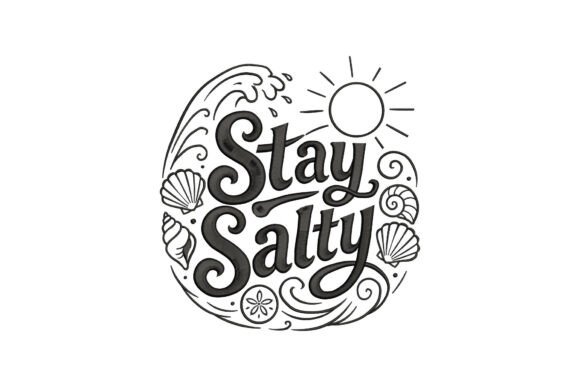
As an embroidery designer who specializes in commercial branding and small business merchandise, I approach every new machine embroidery design with a critical eye. When evaluating the "Stay Salty" design for potential use in branded apparel or retail products, my primary concern is not just aesthetic appeal, but production viability. The product description notes that this design is created to add a subtle touch of charm and creativity, making it perfect for stitching on T-shirts, towels, pillows, and home décor. However, for small business owners, Etsy sellers, and apparel decorators, the question remains: does this design translate effectively from a digital file to a profitable, professional finished product?
Visual Personality and Brand Alignment
My first impression of Stay Salty is that it strikes a delicate balance between playful and rustic. For businesses in the beach, coastal, café, or handmade sectors, this tone is essential. It avoids being overly cartoonish, which can cheapen a brand, while steering clear of stiff corporate aesthetics that alienate boutique customers. The phrase itself carries a double entendre that appeals to modern consumers; it suggests resilience and authenticity alongside the literal beach theme.
For a creative studio, florist, or pet brand, this visual personality serves as an excellent conversation starter. It feels handcrafted rather than mass-produced, which is crucial for maintaining the perceived value of a handmade product. When I review design assets for clients, I look for versatility. Stay Salty appears to possess the visual weight necessary to stand alone as a statement piece on a tote bag, yet it retains enough negative space to function as a secondary logo accent on a staff uniform sleeve. This duality makes it a strong candidate for businesses looking to expand their merch line without commissioning entirely new artwork.
Commercial Applications Beyond Home Décor
While the description highlights home décor, the real ROI for small businesses lies in wearable and functional merchandise. In my professional assessment, Stay Salty has high potential for several specific commercial applications:
- Staff Uniforms and Aprons: For beachside cafés or bakeries, this design works beautifully as apron embroidery. Placed on the chest pocket area or the lower hem, it reinforces team culture while signaling a relaxed, friendly atmosphere to customers.
- Retail Tote Bags: As a tote bag design, Stay Salty can transform a generic canvas bag into a branded revenue stream. The design’s charm encourages reuse, turning customers into walking billboards.
- Embroidered Patches: This is perhaps the most versatile application. Converting this embroidery file into a merrowed-edge patch allows businesses to sell add-ons or customize inventory without committing to pre-embroidered stock.
- Cap Embroidery: If the digitizing supports curved surfaces, this design could serve as a front-panel logo for dad hats or trucker caps, which are high-margin items for Etsy sellers.
These applications move the design beyond simple decoration and into the realm of strategic brand identity building. Each stitch contributes to customer recognition and trust.
Production Considerations and Technical Constraints
A pretty design on screen can become a production nightmare on fabric if technical limitations are ignored. When preparing Stay Salty for commercial embroidery, you must evaluate where caution is required. The "subtle touch" mentioned in the description often implies finer details or lighter stitch density. While aesthetically pleasing, this requires careful management during production.
Small Patch Sizes: If you intend to resize this design down to a 2-inch patch, verify that the text remains legible. Fine serifs or thin connecting lines may disappear or cause thread breaks at reduced scales. Always request or create a test sew-out at the smallest intended size before bulk production.
Fabric Texture and Stabilizer: The design is listed as suitable for towels and T-shirts, which represent opposite ends of the stability spectrum. Towels require a water-soluble topping to prevent stitches from sinking into the pile, while T-shirts demand a cut-away stabilizer to prevent puckering. If applying Stay Salty to textured fabrics like linen aprons or waffle-knit towels, adjust your stabilizer strategy accordingly. High-pile fabrics may obscure the "subtle charm" unless a firm backing is used.
Stitch Density and Washability: For staff uniforms and work shirts that undergo frequent industrial laundering, ensure the stitch density is sufficient to withstand abrasion. Designs that are too light may fray over time. Conversely, if the design is too dense for lightweight T-shirts, it will create a bulletproof vest effect that drapes poorly. Check the technical specifications of the digital embroidery file to confirm it matches your target garment weight.
Strategic Value for Small Business Growth
Integrating Stay Salty into your product lineup affects more than just aesthetics; it influences buyer engagement and product value. In the current market, customers crave connection. A design that feels authentic enhances the perceived quality of custom apparel. When a customer sees a well-executed embroidery design on a barista’s apron or a shop owner’s hat, it signals attention to detail. This professionalism builds trust.
Furthermore, consistent use of specific design assets across multiple touchpoints—packaging accents, thank-you cards, and merchandise—creates visual cohesion. Stay Salty offers a thematic anchor that can tie together disparate products. For Etsy sellers, this consistency improves shop branding and makes listings instantly recognizable in search results. The design acts as a visual shorthand for your business's vibe, reducing the cognitive load for new customers trying to understand your brand.
Essential Pre-Production Checklist for Designers
Before loading this embroidery file into your machine for a client order or personal stock, adhere to this professional workflow to ensure success:
- Verify Licensing: Confirm that your purchase includes commercial rights for selling finished goods or patches. Never assume a design is cleared for business use without checking the specific license terms.
- Check Hoop Size Compatibility: Ensure the design dimensions fit within your machine’s maximum embroidery area. If resizing is necessary, use professional software to recalculate stitch paths rather than simply stretching the file.
- Test Thread Colors: Monitor how your chosen thread colors interact with the fabric. A subtle grey thread on a white towel may vanish, whereas a high-contrast navy will pop. Create a colorway chart for repeatable results.
- Create a Printable Mockup: Before stitching physical samples for client approval, generate a printable mockup. This saves thread and time during the revision phase and helps manage client expectations regarding scale and placement.
- Sew-Out Validation: Always test on the actual fabric intended for production. A design that looks perfect on cotton twill may fail on performance polyester. Inspect spacing, registration, and tension critically.
- Compare Beside Other Assets: Place Stay Salty next to your existing logos and branding elements. Ensure the style, weight, and complexity are harmonious. Visual inconsistency can dilute brand impact.
By treating Stay Salty as a professional asset rather than just a decorative element, you maximize its utility. Whether you are embellishing towels for a vacation rental or creating signature caps for a surf shop, success lies in respecting both the artistic intent and the mechanical realities of embroidery. Always consult the specific file details regarding stitch count and format compatibility, as these variables dictate the final outcome. With proper testing and strategic application, this design can become a cornerstone of your small business merchandise collection, delivering both charm and commercial viability.